Democracy Is Being Dismantled Upstream. By the Time You Vote, It May Already Be Over.
The Global Democracy Coalition's 2026 forums document a structural shift in how democracies fail. The threat is no longer the ballot box -- it is the years before it: algorithmic disinformation, captured institutions, excluded candidates, shrinking civic space. The communities most exposed to this democratic erosion are the same communities most exposed to climate change. This is not coincidence.
The Global Democracy Coalition's regional forums, convening this month across four continents, are documenting a shift in how democratic systems fail that has not yet entered mainstream political commentary with the urgency it deserves.
The old threat was electoral fraud: stuffed ballot boxes, intimidated voters, manipulated counts. These threats persist. But a more durable and harder-to-reverse threat has emerged alongside them: the systematic manipulation of the conditions under which citizens form political preferences, long before a vote is cast.
By the time you vote, it may already be over. Not because the count was rigged, but because the choice was narrowed years earlier, in spaces and by mechanisms that most voters never see.
The three-layer mechanism
The process works through three mutually reinforcing layers.
First, AI-driven disinformation floods civic space with content designed not primarily to persuade, but to exhaust. The goal is not to convince citizens of a particular position, but to produce a population so saturated with competing claims, so uncertain about what is true and what is fabricated, that it retreats from political engagement entirely. Disengagement is the intended outcome. An exhausted electorate is a manageable electorate.
Second, civic space itself is legally constrained. NGOs face registration barriers that function as operating bans. Protest laws are tightened to the point of practical prohibition. Independent media organisations are defunded through selective advertising withdrawal, bought by politically connected owners, or subjected to regulatory pressure that is legally dressed as neutral enforcement. The infrastructure of informed political participation is removed before the election takes place.
Third, electoral processes are shaped at the candidate selection stage. Candidates are excluded before the ballot through disqualification on technical grounds. Legal frameworks are rewritten to advantage incumbents. Oversight institutions -- election commissions, courts, audit bodies -- are packed with appointees whose tenure depends on the results they produce.
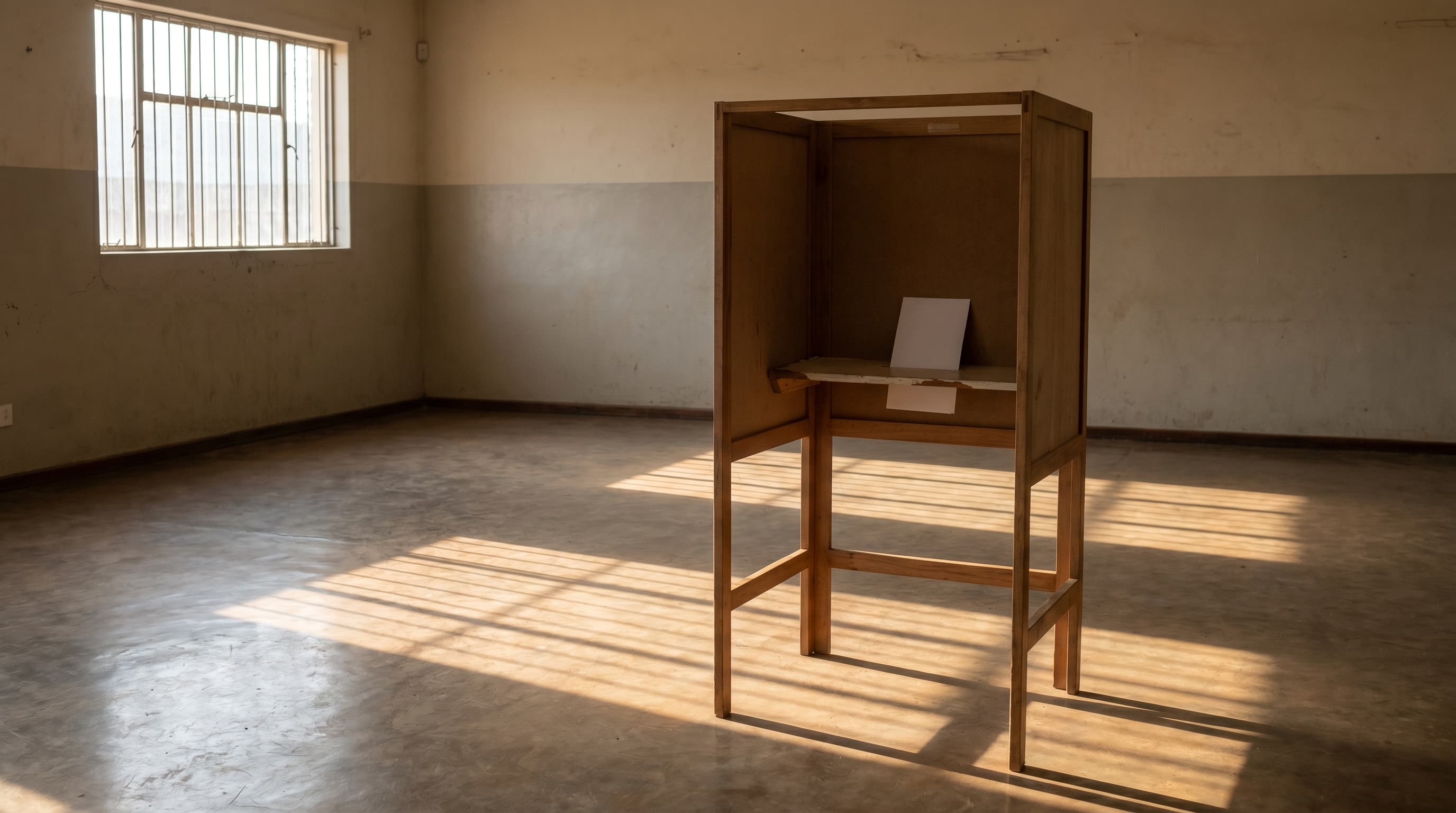
The result, as Africa Political Outlook 2026 describes it, is the "election without choice" -- a formally correct democratic procedure that produces a predetermined outcome. The ballot is real. The choice is not.
The geography of democratic erosion and climate vulnerability
This pattern is not uniformly distributed. The nations where democratic institutions are most likely to be captured -- in sub-Saharan Africa, Southeast Asia, Central Asia, parts of South Asia and Latin America -- are also the nations most vulnerable to the consequences of climate change. The communities most exposed to rising heat, intensifying drought, coastal flooding, and agricultural disruption are the communities least able to elect governments that would address these risks.
This is not coincidence. It is the same structural logic operating simultaneously in two domains. The populations that bear the greatest climate burden are also the populations with the least democratic power to demand responses to it. The fossil fuel interests that benefit from continued emissions are the same interests that fund the capture of oversight institutions in the countries where regulatory constraint is most needed.
A vibrant democracy is not a luxury for prosperous nations who can afford the indulgence of free elections. It is the mechanism by which the most climate-vulnerable populations can force governments to act. Without it, climate policy proceeds at the pace set by those who profit from its absence.
The TGF proposition
Build the democratic infrastructure first. The climate policy follows from populations that have the actual power to demand it -- not from international pledges signed by governments that will not be held to them.
This requires investment in the infrastructure of democracy: independent journalism, civic education, electoral integrity monitoring, judicial independence, and legal frameworks for digital disinformation that are built around public interest rather than platform profit.
It requires accepting that the half-hearted version of this investment -- the one that funds international democracy promotion without challenging the economic interests that fund democratic erosion -- is not sufficient. The eyewash version of democracy support, like the eyewash version of climate action, produces reports and conferences and targets. It does not produce functioning accountability.
The election is downstream. The work happens upstream.