The UK Banned Kanye West to Protect the Public Good. Who Decides What That Means?
The UK Home Office banned Kanye West from entering the country, citing that his presence would not be 'conducive to the public good.' The stated grounds -- sustained antisemitism -- are not frivolous. But the process is: no published criteria, no judicial review, no defined standard. The same ministerial power has been used against journalists and political activists. A democracy must answer for how it limits speech, not just whether it does.
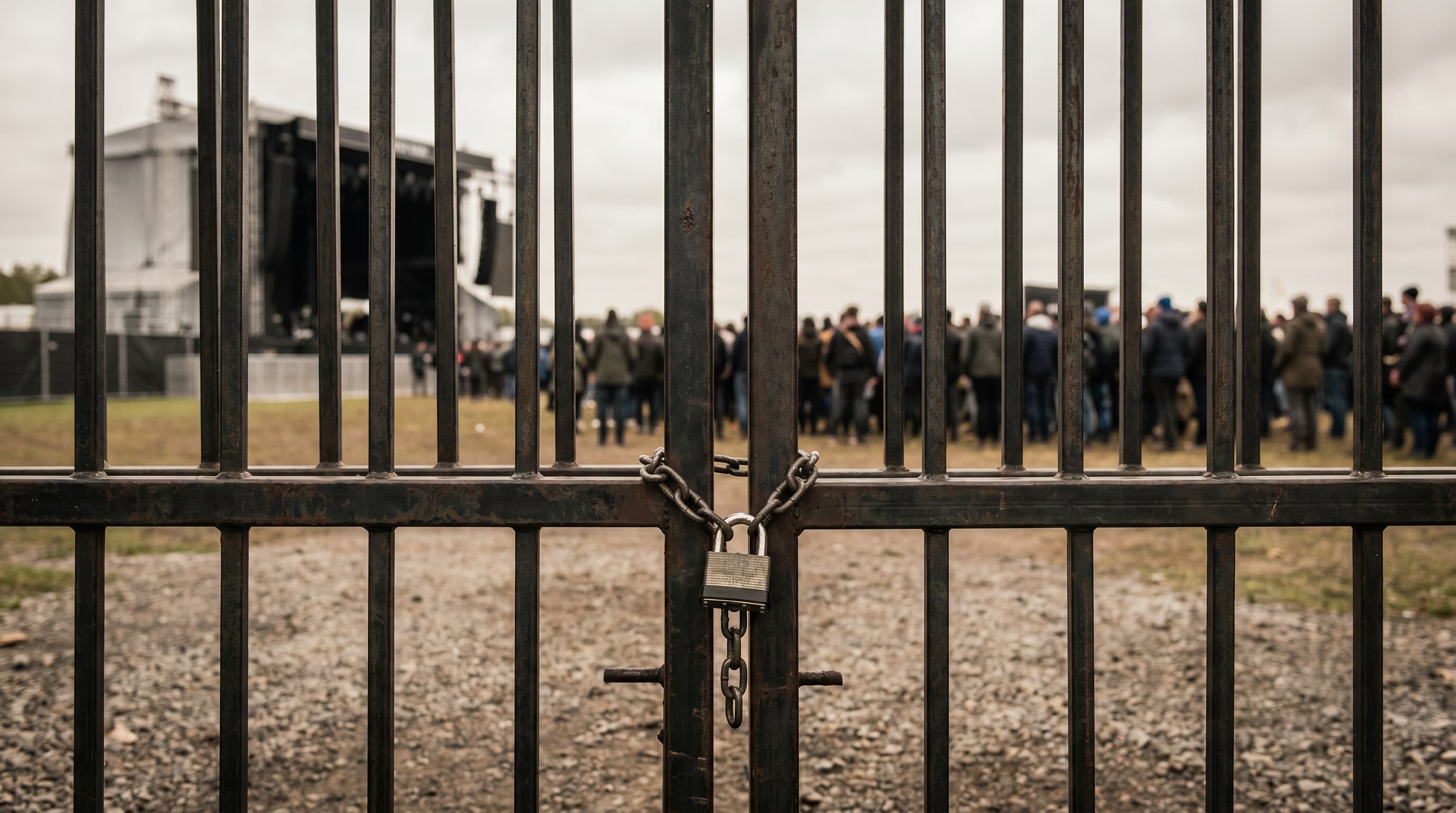
The UK Home Office has banned American rapper Kanye West from entering the United Kingdom. The stated grounds are that his presence would not be "conducive to the public good," citing his sustained public antisemitism. The Wireless Festival in London has been cancelled as a result. All tickets will be refunded.
The facts of this specific case do not make the outcome obviously indefensible. West's antisemitism has been persistent, explicit, commercially amplified, and in some instances directly inciting. Governments have a legitimate interest in protecting minority communities from systematic dehumanisation -- Jewish communities in the United Kingdom have experienced measurable increases in antisemitic incidents and harassment. The concern is real.
The problem is not what was decided. The problem is how.
The process that is absent
The "conducive to the public good" standard in UK immigration law is a ministerial power. It requires no published criteria. The decision is not subject to prior judicial review -- it is ministerial discretion, applied case by case, with the only accountability being post-hoc legal challenge by a claimant who may not have the resources to mount one.
The same power that banned Kanye West has been used, in the past two decades, against journalists reporting on UK security services, against human rights lawyers seeking to document British military conduct abroad, against political activists whose views were inconvenient rather than harmful, and against foreign academics whose research challenged government policy. The power is not new. The target changes.
This is the constitutional question: when the state decides that a person's presence is not conducive to the public good, on what basis is that determination made? By whom is it reviewed? What is the defined standard that distinguishes protected political speech from speech that legitimately justifies exclusion?
If the answer is "whatever the Home Secretary decides," then the protection is illusory. It is not a right if its application depends on the political preferences of the person currently holding the relevant ministerial brief.
The parallel to climate governance
The logic of "national interest" applied to speech exclusion is structurally identical to the logic of "national interest" applied to emissions commitments. In both cases, the state claims a legitimate authority to override a general principle -- free movement, climate obligation -- on grounds that it defines for itself, enforces selectively, and exempts itself from external review.
The pattern is consistent. Where there is no enforceable, transparent, independently reviewed standard, the powerful decide when the rule applies. The rule then functions as a norm for others and an option for them.
TGF's constitutional framework is explicit on this point for a reason: democratic legitimacy in limiting rights requires published criteria, proportionality testing, and independent judicial oversight. Not because every limitation of speech or movement is wrong. Some limitations are justified, including this one, arguably. But the justification of an outcome does not validate an opaque process. A democratic society that can produce just outcomes through arbitrary processes has not solved the problem -- it has merely been lucky this time.
What democratic limits on speech require
The TGF position is not that antisemitism must be tolerated in the name of free expression. It is that the standard for state action in limiting expression must meet three tests: transparency (the criteria are published and known in advance), proportionality (the limitation is tailored to the specific harm rather than used as general gatekeeping), and independent review (a court, not a minister, has the final word).
A ministerial ban that meets all three tests can be legitimate. A ministerial ban that meets none of them is an exercise of power, not an exercise of principle.
The concert is cancelled. The question of what a democracy owes its citizens when it limits their rights -- and what citizens owe each other in return -- remains open.
It should not be resolved by convenience.