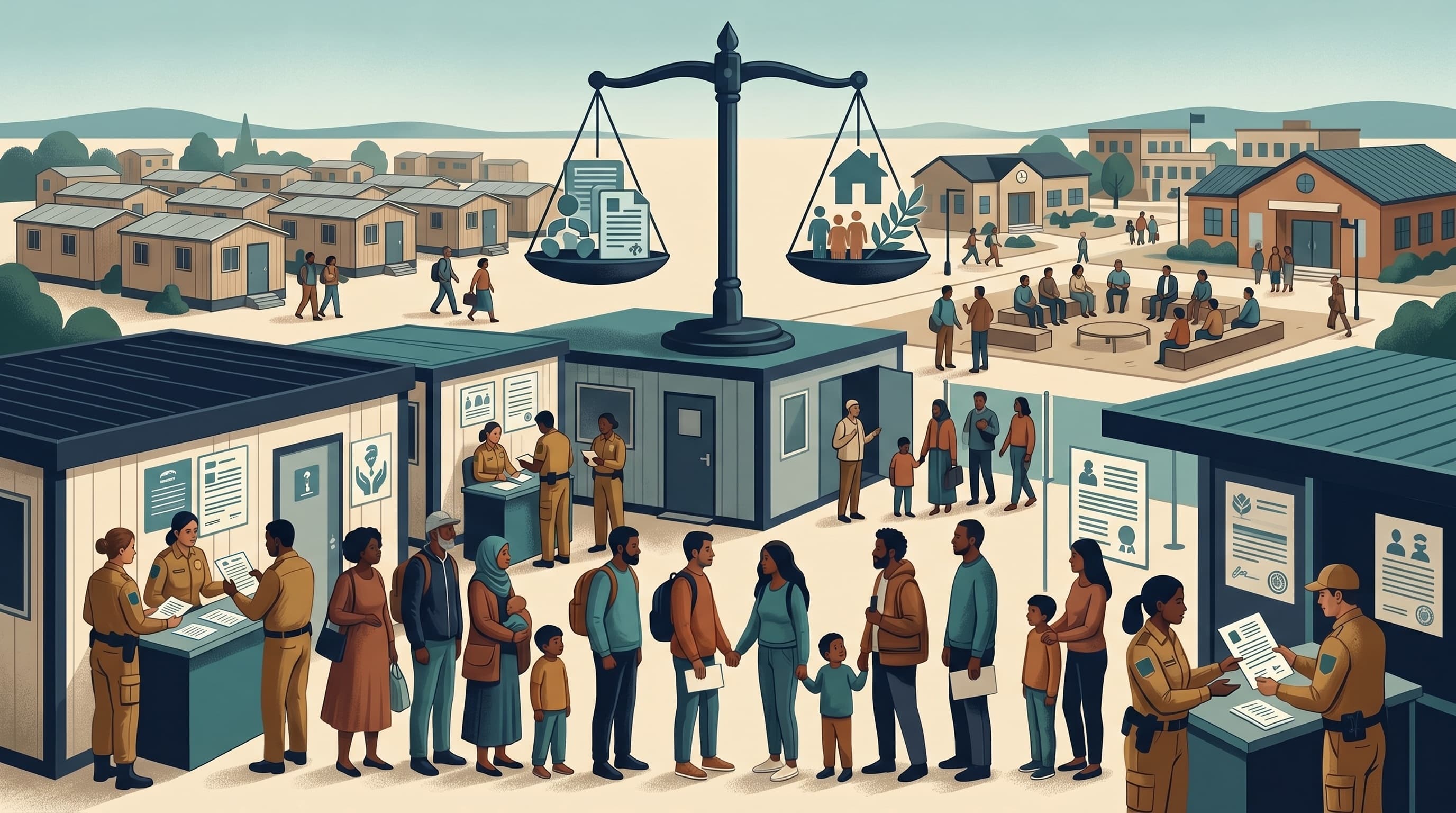
Migration Needs Order Before Extremes Take Over
A serious democracy must manage migration with purpose, limits and humanity before unmanaged flows and unmanaged backlash damage society together.
Migration policy fails when governments confuse reaction for vision.
Reuters reported Tuesday that Amnesty International accused the European Union of complicity in a new Libyan crackdown on migrants. The Financial Times reported on Denmark's centre-left prime minister accepting far-right support for migration plans. Other reports warned that Europe's migration debate is pushing hard-right ideas into the mainstream and that refugee protection is being rolled back on the anniversary of the Geneva convention.
These stories are often framed as a contest between compassion and cruelty. That is too narrow. The deeper failure is the absence of long-term planning.
Migration has to be lawful, controlled, purpose-based and aligned with national interest. It also has to be humane. If democratic leaders refuse to hold both ideas at once, extremists will take the subject from them.
National interest is legitimate
A state has the right and duty to manage who enters, why they enter, how many can be integrated and what obligations follow. Labour shortages, humanitarian protection, education, family reunification and refuge from persecution are all real purposes. So are housing capacity, wages, schools, hospitals, security, social cohesion and public trust.
Treating national interest as an immoral phrase is a mistake. Democracies exist to serve citizens while meeting legal and moral duties. If governments dismiss citizens' concerns about pace, integration and pressure on services, citizens will not become more generous. They will become more angry.
That anger is then harvested by movements that do not want better migration policy. They want resentment.
Uncontrolled flows create uncontrolled politics
Unmanaged migration does not stay a border problem. It becomes a housing debate, a school debate, a wage debate, a crime debate, a cultural debate and eventually an identity debate. Some of those fears are exaggerated. Some are exploited. Some are real. Serious leaders must separate them instead of pretending the whole subject is taboo.
When mainstream parties avoid the practical question of limits, the far right gains permission to define the issue. It offers a simple story: elites ignored you, migrants caused everything, and only harshness can restore order.
That story can win votes. It can also degrade society. A legitimate demand for order can harden into racism. A practical debate about capacity can become collective suspicion. A border policy can become a cultural purge.
This is the danger democracies now face: unmanaged migration on one side, unmanaged backlash on the other.
Order plus humanity
The answer is not open-border romanticism. It is not ethnic nationalism. It is order plus humanity.
Order means clear legal routes, fast and fair asylum processing, removal of those with no lawful right to stay, enforcement against trafficking networks, proper identity checks and migration numbers connected to labor needs and integration capacity.
Humanity means no outsourcing of abuse, no desert or sea death treated as deterrence, no detention systems hidden from scrutiny, no collective punishment and no language that turns people into contaminants. A person can be denied entry or removed lawfully without being stripped of dignity.
If Europe or any democracy funds partners that abuse migrants, it cannot wash its hands by saying the abuse happened elsewhere. Outsourcing does not erase responsibility.
Integration is infrastructure
Migration planning does not end at entry. It begins there.
A country that accepts migrants for work or protection must plan housing, language training, credential recognition, schooling, health access, local government funding and routes into lawful employment. If it does not, it creates informal labor markets, resentment among citizens and vulnerability among migrants.
Integration is not a slogan. It is infrastructure.
This is also where national interest and human dignity meet. A migrant who can work legally, learn the language, follow the law and participate locally is less likely to become a political symbol. A citizen who sees rules enforced and services planned is less likely to believe the system has lost control.
Plug both leaks
The political task is to plug both leaks before they flood the house.
Plug uncontrolled migration through lawful limits, purpose-based entry, enforcement and planning. Plug uncontrolled right-wing sentiment through honest debate, equal law, anti-racism, civic education and refusal to let extremists turn every migrant into a threat.
This is not a contradiction. It is the only stable path.
Democracies lose trust when they let borders become disorder. They also lose trust when they answer disorder with cruelty.
The future belongs to countries that can say two things clearly: migration must be controlled, and human beings must not be degraded.
The Global Federation treats democratic order as a design problem: rights, duties, institutions and public trust have to be built before crisis hands the future to fear.