The African Frontline
Tanzania, Cameroon, Madagascar — three elections, three different shapes of pressure, one civic story. Internet shutdowns. Long incumbencies. Distributed administrative degradation. The civic methods being developed at the African frontline are the methods the rest of the world will need.
The African Frontline
Tanzania, Cameroon, Madagascar — three elections, three different shapes of pressure, one civic story. The youth on the ground are not waiting to be saved.
I. The Continent the World Misreads
Western coverage of African democracy follows a familiar arc. Election approaches. Coverage spikes. Concerns are raised. Election happens. Coverage moves on. The country is left to its own institutional resilience or fragility, with little continued international attention until the next cycle.
This pattern is not malicious. It is structurally lazy. It treats African democratic life as a series of episodic events rather than what it is: an active, daily contest carried by tens of millions of citizens who refuse to surrender the project regardless of how the indices score their countries.
In 2025 and 2026, three elections in three different African countries — Tanzania, Cameroon, and Madagascar — have made the continent the most consequential frontline in the global democratic story. The pattern of pressures across the three is informative. The pattern of resistance is more so.
II. Tanzania: The Internet Shutdown Playbook
Tanzania's October 2025 general election was held under the shadow of multi-day internet shutdowns. The government cut access to major social media platforms in the days surrounding the vote. The official justification was the prevention of disinformation and unrest. The operational consequence was the disabling of citizen-led election monitoring tools that had become standard equipment in democratic civic infrastructure across the continent.
The shutdown is now a recurring tactic. It is being deployed in several countries as a low-cost, high-impact instrument for shaping electoral environments. The cost to the regime is some international criticism and a temporary economic hit. The cost to the opposition is the disabling of the technology stack they had built up to monitor polling stations, document irregularities, and coordinate civic response.
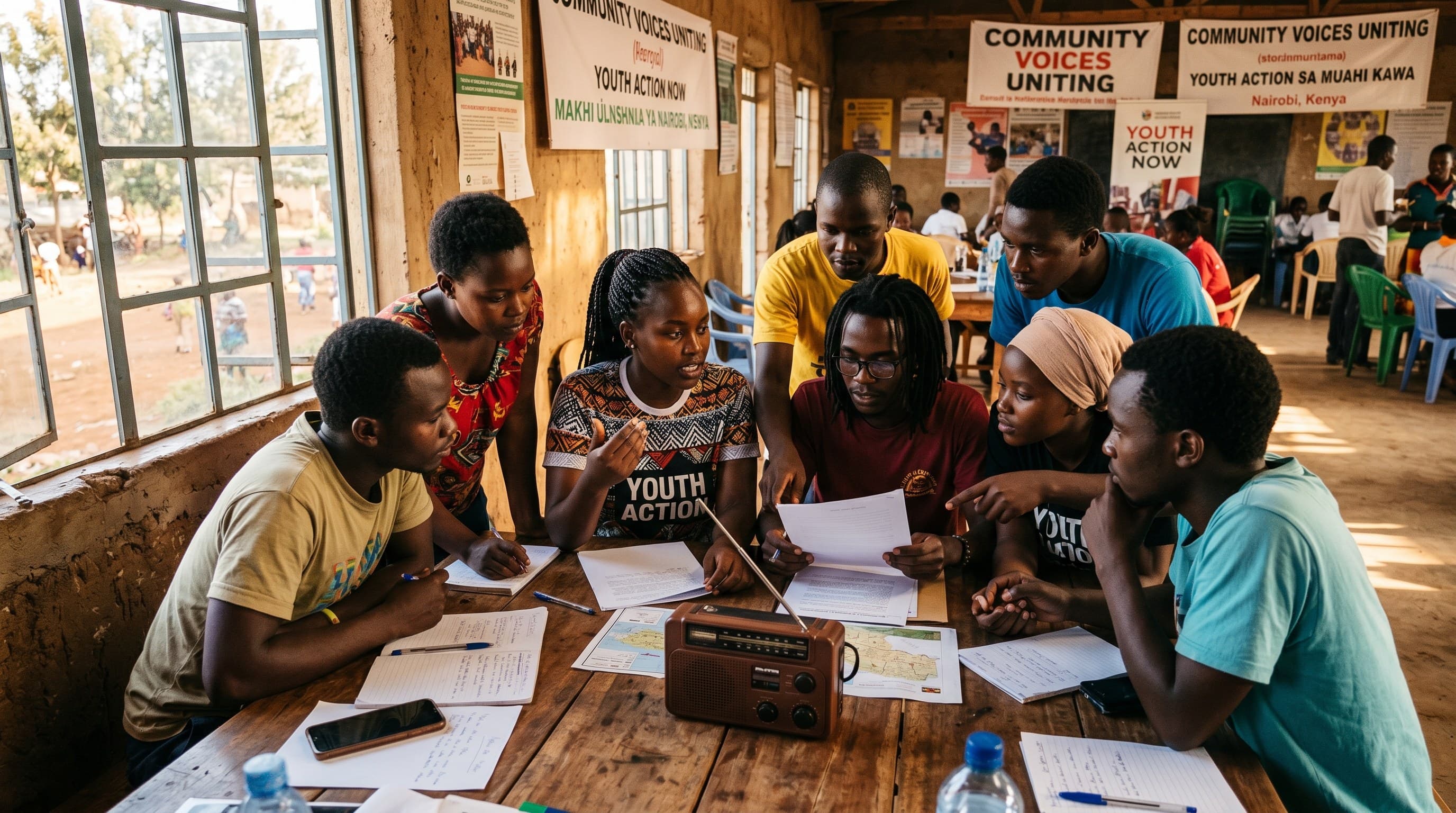
What is different in Tanzania, and what has not received adequate international coverage, is the speed with which civic actors adapted. Within hours of the shutdown, parallel offline networks — radio relays, paper-based monitoring forms, courier networks carrying results between polling stations — went into operation. These networks were not improvised. They had been pre-positioned by civic organisations who had anticipated the shutdown precisely because the shutdown was a foreseeable tactic.
The election results themselves were contested. The Civic monitoring infrastructure that operated through the shutdown produced documentation that has become the basis for ongoing legal and political challenges. Whether those challenges succeed is a separate question. What matters for the broader story is that the shutdown did not achieve its operational goal of disabling civic oversight. It only changed the medium through which oversight was carried out.
This is the playbook of resistance: anticipate the playbook of repression, build redundancy, accept that some tools will be lost, and ensure others remain in operation. Tanzanian civil society demonstrated this playbook at scale.
III. Cameroon: The Long Incumbency Problem
Cameroon's October 2025 presidential election returned Paul Biya to office at age ninety-two, extending an incumbency that began in 1982. The election was contested. The opposition disputed both the conduct and the outcome. International observers raised concerns about restrictions on opposition campaigning, on independent media coverage, and on civic organising in the lead-up to the vote.
The Cameroon case illustrates a different pressure pattern from the Tanzanian one. There was no dramatic internet shutdown. There was no single moment of visible repression. The democratic erosion was distributed across hundreds of smaller frictions: the journalist who could not get accreditation, the opposition rally that could not get a permit, the civic organisation whose registration papers were lost in administrative processing, the international observer mission whose access was technically granted but operationally constrained.
The cumulative effect is the same as a single dramatic intervention, but it is harder to document and harder to mobilise international attention against. This is the future of authoritarian innovation: not the violent disruption of democratic process, but the slow, distributed degradation of the conditions that make democratic process meaningful.
The civic response in Cameroon has been organised and persistent, particularly among the country's youth. University networks, professional associations, and a vigorous diaspora civic movement have continued to document, contest, and pressure. The international attention they get is small. The work they do does not stop.
The lesson the world should be learning: in long-incumbency cases, the relevant question is not whether this election will be the breakthrough. It is whether the civic capacity is being maintained and grown so that, when the political moment arrives — and historically it always arrives — the capacity is in place to convert it into a durable transition.
The Cameroonian civic actors are doing that work. They are not waiting for international rescue. They are building the foundations of a post-Biya democratic infrastructure under conditions that make the building difficult.
IV. Madagascar: The Fragility of Recent Gains
Madagascar's political environment has been unstable for years. Elections have been held. Transitions have happened. Constitutional changes have been proposed and contested. The country is in the middle band of African democratic indicators — neither solidly democratic nor clearly authoritarian, with serious work to do on both directions.
What makes Madagascar a useful case for the frontline analysis is that it represents the largest category of African democratic states: countries with formal democratic institutions and recurring electoral cycles, where the operational quality of democracy depends heavily on year-to-year civic and institutional choices. These are not headline cases. They are the median cases.
The pressures on Malagasy democracy are familiar. Restricted civic space. Pressure on independent media. Concerns about judicial independence. Restrictions on opposition organising during sensitive political moments. None of the pressures is new. All of them, sustained over time, threaten the gains of the last two decades.
The civic response has been creative. Madagascar has seen significant innovation in radio-based civic education, in community-based election monitoring, in faith-based civic networks, and in the use of mobile technology for transparent budget tracking at the municipal level. These innovations are below the threshold of international media attention. They are above the threshold of operational significance.
The Madagascar case demonstrates that the frontline of democratic resilience is often invisible to the international observer. The methods that work at this scale do not photograph well. They sustain themselves anyway.
V. The Pattern Across the Three
Three different countries. Three different pressure patterns. One emerging civic pattern.
Anticipation, not reaction. In all three countries, the civic actors who matter most have stopped waiting for the regime to act before organising. They are pre-positioning the tools, the networks, and the relationships they need. When the shutdown comes, the parallel network is already operational. When the registration restriction comes, the alternative legal pathway is already mapped. When the media pressure comes, the diaspora distribution channel is already active.
Distributed leadership. None of the three civic ecosystems depends on a single charismatic leader whose elimination would collapse the resistance. The leadership is distributed across hundreds of organisations, professional networks, faith communities, and informal coalitions. This is the deliberate counter-design to a regime strategy that targets specific high-profile figures.
Cross-border solidarity. African civic networks have grown denser over the last decade. The election monitor in Cameroon talks to the radio organiser in Madagascar talks to the offline-network technologist in Tanzania. They share tools, training, legal frameworks, and emotional support. The continent is becoming, civically, what the European Union claims to be politically: a connected space where what works in one place travels.
Youth-led, not youth-only. The headline narrative often centres youth as the protagonists. The reality is more interesting. Youth provide energy, technological fluency, and willingness to take risks. Older civic actors provide institutional memory, legal expertise, and sustained organisational capacity. The combination is the actual force. Either alone is weaker.
VI. What the World Owes the Frontline
The international democratic community has historically given African civic movements three things, in roughly this order: insufficient attention, conditional financial support, and well-meaning but often poorly designed technical assistance.
What is needed now is different.
Sustained attention. Not just at election time. Through the long, unglamorous periods between elections when civic infrastructure is being built, contested, defended. The most damaging international pattern is the one that lights up around the polling stations and goes dark the day after.
Equal partnership. Civic actors in Tanzania, Cameroon, and Madagascar have learned things about democratic resilience under pressure that their counterparts in older democracies have not had to learn. The flow of expertise should be bidirectional. The frontline knows things the centre needs to learn.
Infrastructure that works under hostile conditions. Communication tools that survive shutdowns. Documentation tools that work offline. Legal frameworks that operate across diaspora networks. Funding mechanisms that do not depend on the goodwill of the regime being challenged. This is the practical kit the frontline needs. It can be built. Some of it has been built. More is required.
VII. The Frontline Is the Future
The phrase "African frontline" can sound like a regional story. It is not. It is the global story.
The pressures being deployed against democratic civic life in Tanzania, Cameroon, and Madagascar are the pressures that have already arrived in older democracies and that will continue to arrive at higher intensity. Internet shutdowns happen in India, in Iran, in parts of Europe. Long incumbencies sustain themselves through distributed administrative pressure across multiple continents. Civic space narrows from many directions in many places.
The civic methods being developed at the African frontline are the methods the rest of the world will need. The mutual aid networks, the offline redundancies, the distributed leadership, the cross-border solidarity, the youth-elder collaboration — these are not regional adaptations. They are the operating system of democratic civic life under twenty-first-century pressure.
The continent is not waiting to be saved. The continent is teaching the rest of the world how to keep going.
The least the rest of the world can do is pay attention.
Published by The Global Federation Peace, Prosperity & Progress