Democracy from the Inside Out: The Lessons of the V-Dem 2026 Report
As autocratization hollows out established democracies from within, the solution lies not in preserving existing institutions, but in expanding active, participatory citizenship.
I. The Suffocation of the Civic Space
Democracy does not always die with a military coup or tanks in the streets. In the twenty-first century, the collapse of freedom is quieter, slower, and far more insidious. It is executed by leaders who win elections, only to systematically dismantle the checks, balances, and liberties that made those elections meaningful.
This is the central warning of the V-Dem Democracy Report 2026, titled "Unraveling The Democratic Era?".
Published by the V-Dem Institute at the University of Gothenburg and based on the comprehensive Dataset v16, the report confirms that the global decline in democratic standards is accelerating. Nearly three-quarters of the world's population—six billion people—now live under autocratic rule. More critically, the report reveals that autocratization is no longer a disease of fragile transitions; it is hollowing out established democracies in Europe and North America from within.
When freedom of expression is restricted, when the judiciary is compromised, and when the press is co-opted, the shell of democracy remains, but the substance is gone.
II. The Anatomy of Autocratization From Within
The V-Dem 2026 findings reveal structural patterns in the way modern democracies are being dismantled:
1. The Hollowing of the Core
Of the ten countries currently undergoing the most rapid autocratization, six are established Western democracies, including the United Kingdom, Italy, and the United States. In these nations, the erosion is led by political actors who use polarization, media concentration, and institutional reform to weaken the separation of powers.
2. Freedom of Expression as the First Target
Across the globe, the most frequent and severe target of autocratizing regimes is freedom of expression. By censoring online discourse, prosecuting whistleblowers, and placing pressure on independent media outlets, leaders create an information environment where dissent is marginalized and accountability is impossible.
3. The Collapse of Liberal Safeguards
The second most common target is the liberal component of democracy: the rule of law, civil liberties, and legislative oversight. By packing courts, bypassing parliamentary debates, and using emergency powers, executives turn legislatures into rubber stamps and judiciaries into political tools.
III. The TGF Vision: Reclaiming the Democratic Promise
The Global Federation views the V-Dem 2026 report not as a counsel of despair, but as an urgent call to action. The current crisis is a symptom of a deeper design flaw: we have reduced democracy to a spectator sport, where citizens participate once every few years by casting a ballot, leaving the governance of society to professional politicians and lobbyists.
To reverse the tide of autocratization, we must move beyond defensive preservation. We must expand democracy from the inside out:
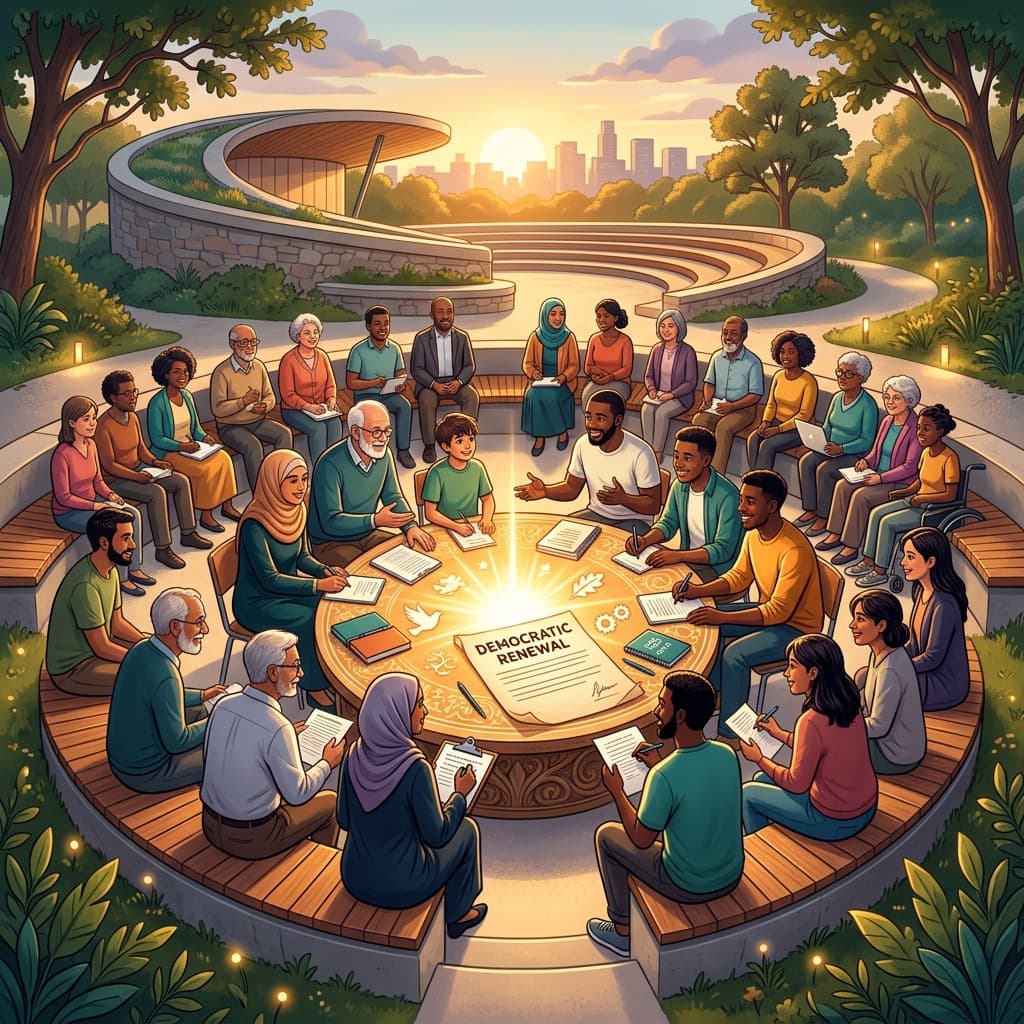
- Active Citizenship: Democracy is not a state of rest; it is an active practice. We must create permanent channels for citizen participation in policy design, budget allocation, and constitutional oversight.
- Decentralized Communications: Since freedom of expression is the primary target of autocracy, the infrastructure of public debate must be decentralized. We must build open, public-service digital platforms that are owned by the community, free from both corporate advertising models and state censorship.
- Decentralized Power: We must devolve decision-making power to the local level, utilizing citizen assemblies, deliberative forums, and local councils. When power is distributed, it is much harder to capture and centralize.
IV. The Choice Before Us
The V-Dem report is a mirror. It shows us a world where the nets of state control and corporate media are tightening, compressing the individual and hollowing out civic life.
The solution is not to go back to the status quo. The status quo is what brought us here.
The solution is to build a more robust, participatory, and transparent democratic model. By defending freedom of expression, decentralizing communications, and placing decision-making power directly in the hands of citizens, we can cut the wires of autocracy and strengthen the threads of voluntary cooperation. The future of democracy depends on the resurgence of the active individual.
Published by The Global Federation Peace, Prosperity & Progress